Rochester, IL Storm Damage Roof Repair & Emergency Tarping
Rapid local emergency dispatch connecting Rochester and Sangamon County property owners with licensed, insured roofing contractors for immediate storm damage tarping, hail inspections, and active leak repairs.
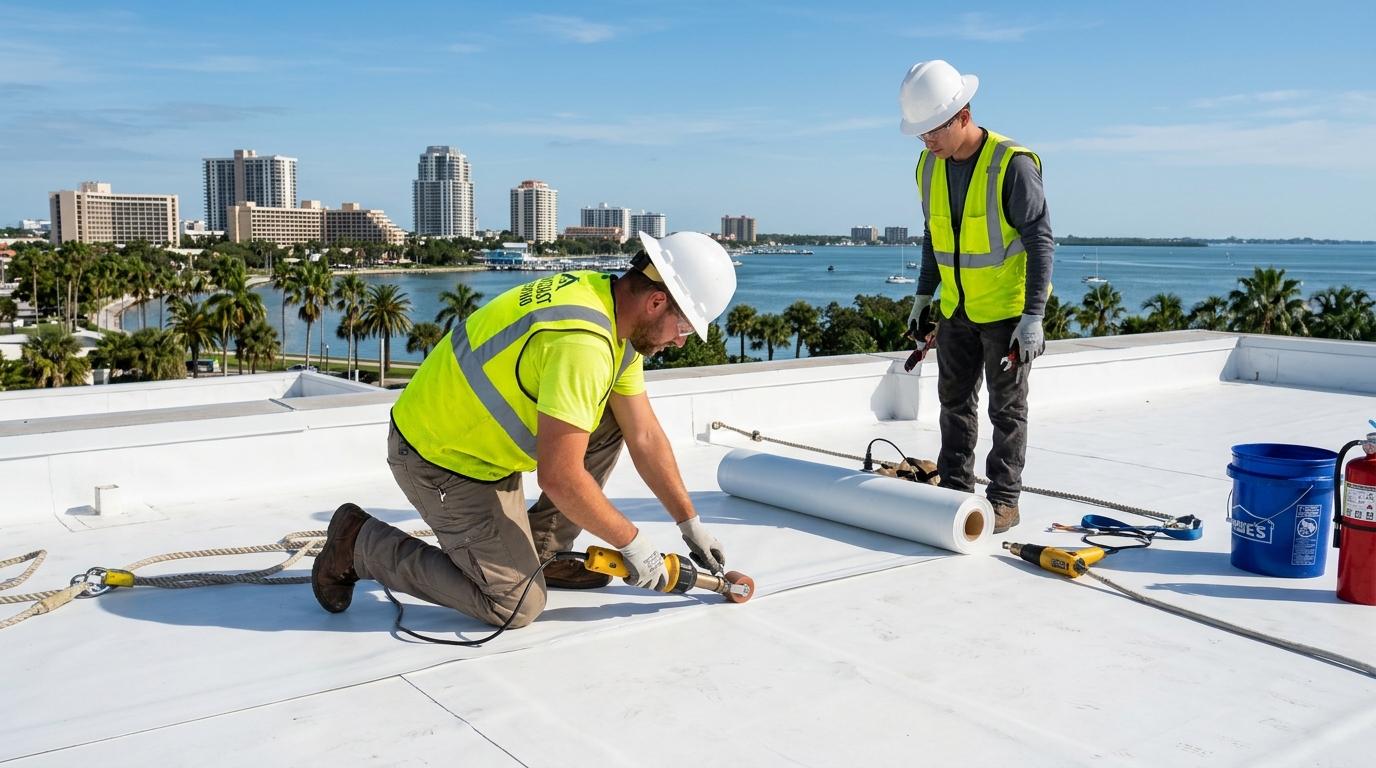
Positioned southeast of Springfield near Lake Springfield and the South Fork of the Sangamon River, Rochester features a picturesque blend of established residential neighborhoods, sprawling wooded acreage properties, and modern suburban developments. Rochester's proximity to open water and agricultural prairie lands creates unique localized wind turbulence and severe microburst activity during summer convective thunderstorm fronts.
Severe prairie winds frequently rip asphalt shingle tabs along exposed rakes, while mature oak and walnut trees bordering Rochester properties pose constant limb impact hazards. When heavy tree limbs puncture plywood sheathing or torrential rain breaches wind-lifted shingle courses, immediate mitigation is required to avert catastrophic interior ceiling collapse. RoofExpertUSA provides 24/7 telephone dispatch connecting Rochester property owners with licensed emergency crews for immediate 10-mil timber-batten tarping and structural water diversion.
During extreme severe thunderstorm warnings, emergency response time is paramount. Trapped water quickly degrades wood structural components, initiates insulation rot, and creates hazardous conditions around overhead electrical fixtures. RoofExpertUSA eliminates bureaucratic intake delays by directly linking homeowners with active emergency repair crews already dispatched across the Rochester area.
Localized Field Protocol: Rochester River Basin Storm Shear & Heavy Tree Impact Mitigation
Rural-Suburban Interface & Large Acreage Roofing Protocols: Properties in Rochester often feature complex multi-pitch roof designs with extensive valley intersections and long gutter runs. Dispatched specialists deploy commercial W-valley flashings and high-adhesion peel-and-stick underlayments engineered to shed massive water volumes without cross-slope capillary leakage.
- Rapid Phone-to-Crew Dispatch: Connecting directly with on-call crews in Rochester without administrative delay.
- 10-Mil Timber-Batten Tarping: Full weather encapsulation engineered to withstand severe prairie gusts up to 70 MPH.
- FLIR Infrared Moisture Tracing: Non-destructive moisture mapping along attic rafters and ceiling planes.
- Illinois State Licensing: Physical repairs executed by IDFPR licensed, insured local roofing contractors.
1. Local Microclimate Dynamics & Prairie Severe Storm Exposure
The geography of Rochester places residential and commercial properties under acute weather exposure during springtime convective supercells and autumnal cold frontal boundaries. Flat, treeless prairie stretches surrounding the community allow sustained wind velocity to accelerate unimpeded. When hail-producing downdrafts impact sloped roof planes, the kinetic energy fractures asphalt shingle mats and strips ceramic mineral protective coatings, initiating progressive substrate rot.
Microburst downbursts in Central Illinois can produce brief localized wind shears exceeding 75 MPH. Under these conditions, standard adhesive seal strips on asphalt shingles fail in shear, lifting shingle tabs upward and driving wind-driven rain horizontally under the protective matrix. Dispatched emergency teams arrive equipped to address these exact dynamic storm stresses.
2. Non-Destructive Moisture Diagnostics & FLIR Thermal Tracing
Dispatched contractors utilize high-resolution FLIR infrared thermal cameras to diagnose storm water leaks across Rochester homes. By leveraging temperature differentials between water-saturated insulation and dry structural wood framing, technicians accurately map the exact point of exterior water entry without puncturing or cutting finished interior drywall ceilings.
Thermal imaging is complemented by non-invasive radio-frequency capacitance impedance meters. These diagnostic tools emit non-destructive electrical impedance signals into roof substrates, identifying trapped moisture within insulation boards, tongue-and-groove decking, and rafter bays without exploratory demolition.
3. Step-by-Step Substrate Restoration Methodology
Once emergency tarping or active leak containment is secured, contractors follow rigorous restoration protocols. Damaged shingle courses are carefully unsealed using specialized flat pry bars to prevent tearing adjacent mats. Compromised sheathing is replaced with CDX plywood, covered with self-adhering polymer ice and water barrier membranes, and re-shingled with heavy-duty Class 4 impact architectural shingles secured with six corrosion-resistant nails per strip.
Flashing transitions around sidewalls, valleys, and chimneys receive complete mechanical reconstruction. Valley junctions are reinforced with dual-layer polymer underlayments and 26-gauge ribbed center-splash metal valleys. Chimneys receive two-piece reglet counter-flashings diamond saw-cut into mortar joints, providing decades of maintenance-free waterproofing.
4. State Energy Codes & Contractor Licensing Compliance
All roofing work referred through our dispatch service complies strictly with the Illinois Roofing Industry Licensing Act (225 ILCS 320) and applicable municipal building codes across Sangamon County. Contractors hold active licenses issued by the Illinois Department of Financial and Professional Regulation (IDFPR), carry comprehensive general liability and worker's compensation insurance, and secure all required local municipal building permits.
Contractors strictly observe local energy efficiency standards, verifying that continuous attic ventilation and minimum insulation R-values comply with the Illinois Energy Conservation Code. This holistic approach ensures restored roofs withstand seasonal thermal stress while optimizing indoor climate comfort.
5. Preventative Property Maintenance & Storm Preparedness
Homeowners in Rochester can minimize storm vulnerabilities by establishing routine preventative maintenance. Key recommendations include pruning heavy tree limbs back at least ten feet from roof edges, clearing seasonal debris from valley channels and gutter downspouts, inspecting neoprene pipe boot collars every three years, and requesting a professional rooftop evaluation following any hail event exceeding 1.0 inch in diameter.
Establishing an annual preventative inspection routine allows minor weathering concerns—such as degraded sealant around attic fans or localized shingle tab unsealing—to be corrected before severe Midwest weather triggers an emergency ceiling breach.
Rochester Emergency Roofing Frequently Asked Questions
Need Emergency Roof Repair in Rochester, IL?
Do not allow storm damage to cause costly interior ceiling and structural decay. Call our Central Illinois emergency telephone dispatch desk right now.
DISPATCH ROCHESTER CREW: (888) 208-4155