Precision Chimney Flashing & Roof Valley Leak Repair in Springfield, IL
Specialized Central Illinois damage mitigation, technical diagnostic procedures, and emergency contractor dispatch for residential and commercial properties in Springfield, IL.
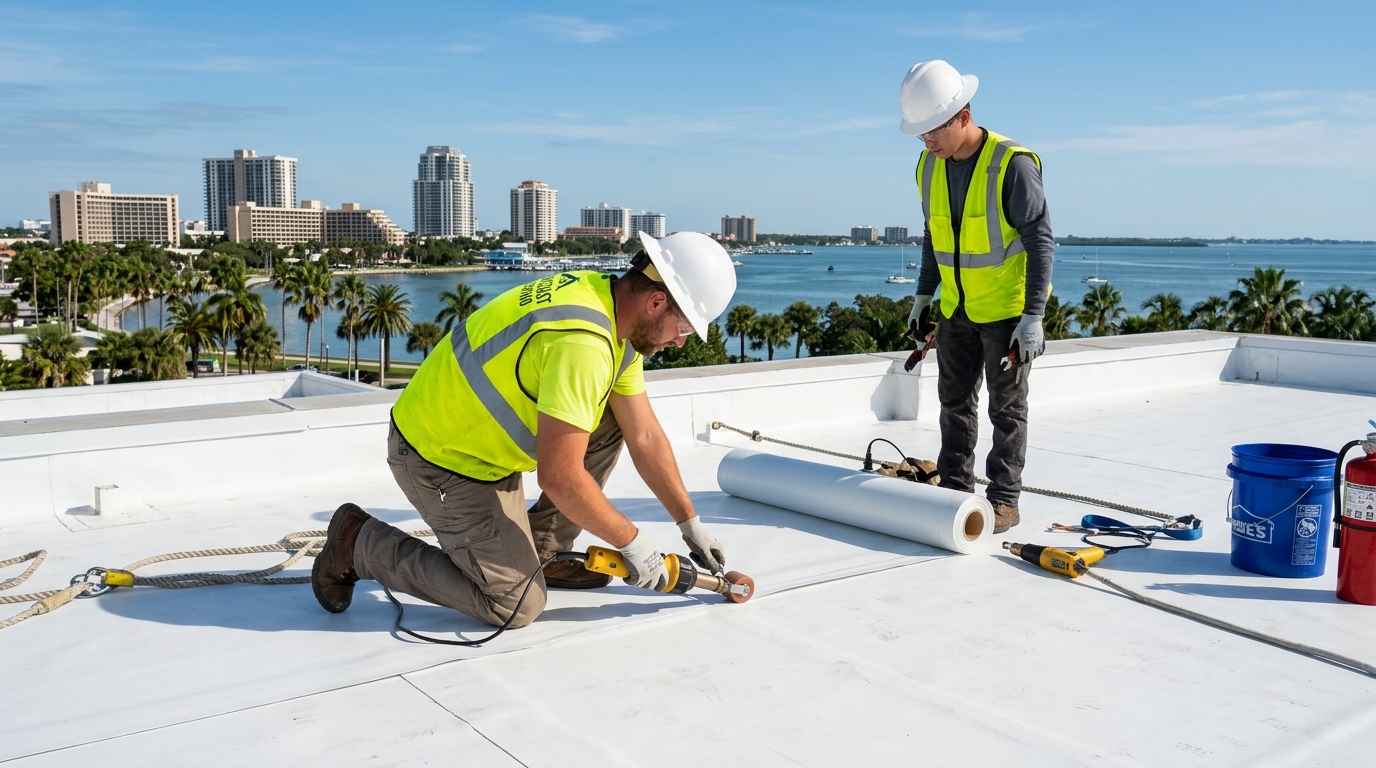
Flashing assemblies around masonry chimneys, roof valleys, sidewalls, and dormers account for more than 70% of active residential roof leaks across Springfield and Sangamon County. These critical transitional intersections represent the most vulnerable points on any roof because they join dissimilar building materials—such as rigid clay brick masonry and flexible asphalt shingles—that expand and contract at dramatically different thermal rates during Illinois seasonal temperature swings.
Historic Springfield homes throughout Washington Park, Enos Park, and Hawthorne Place frequently feature heavy brick chimneys constructed without modern two-piece reglet flashing systems. Over decades of freeze-thaw cycles, original lime mortar joints deteriorate, allowing driving prairie rain to seep behind single-piece flashings. Similarly, closed-cut shingle valleys and oxidized steel valley pans corrode under constant water wash. Dispatched master craftsmen specialize in rebuilding and resealing these critical junctions with permanent, code-compliant metal assemblies.
Precision Flashing Protocols:
- Two-Piece Reglet Counter-Flashing: Diamond saw-cutting a 1.5-inch groove into chimney brick mortar, inserting folded counter-flashing, and sealing with elastomeric polyurethane.
- Galvanized & Lead Step Flashing: Installing individual 90-degree step flashings beneath each shingle course with minimum 4-inch vertical and horizontal lap.
- Center-Splash Ribbed W-Valleys: Deploying heavy 26-gauge galvanized steel valleys with central splash ribs and dual-layer ice and water barrier membranes.
- Chimney Saddle / Cricket Reconstruction: Framing and waterproofing small pitched roofs behind chimneys wider than 30 inches to divert upland runoff.
1. Regional Microclimate Dynamics & Severe Storm Exposure
Thermal Expansion Differentials & Masonry Physics: Clay brick expands at approximately 0.00034 in/ft/100°F while sheet steel expands at 0.00073 in/ft/100°F. In Springfield, rooftop temperatures swing from -15°F in winter to 150°F in summer. Single-piece flashings nailed to both brick and wood framing tear loose under this differential stress, requiring two-piece slip-joint assemblies.
The open agricultural topography surrounding Sangamon County offers minimal surface friction against fast-moving supercells descending from the Illinois River Basin. Prairie winds generate dynamic uplift pressures that expose subtle installation flaws in edge metal flashings and steep-pitch valleys. When sudden downpours coincide with 60+ MPH wind shear, standard gravitational water shedding fails, necessitating immediate on-call physical mitigation.
2. Non-Destructive Moisture Diagnostics & FLIR Thermal Tracing
Subsurface Wall Moisture Scanning: Trapped water leaking through chimney shoulders frequently travels down interior party walls. Technicians deploy FLIR infrared thermal cameras to scan living room fireplace surrounds and attic rafters, detecting hidden moisture before masonry efflorescence or plaster rot occurs.
Water entering through an exterior shingle breach rarely drops directly down. In older Springfield homes with tongue-and-groove decking or dimensional lumber joists, moisture follows gravitational slope lines for thirty to fifty feet before penetrating ceiling drywall. Dispatched specialists trace these concealed paths accurately with calibrated radio-frequency impedance meters and infrared thermography, saving homeowners thousands of dollars in unnecessary drywall exploratory destruction.
3. Step-by-Step Substrate Restoration Methodology
Surgical Reglet Installation Methodology: Technicians grind out deteriorated mortar joints to a clean 1.5-inch depth using diamond masonry blades. 26-gauge sheet metal counter-flashings are inserted with drive lead wedges, secured mechanically, and sealed with high-performance ASTM C920 polyurethane sealants.
Contractors utilize standardized manufacturer procedures endorsed by the Asphalt Roofing Manufacturers Association (ARMA) and NRCA. Fasteners are extracted with flat precision tools to prevent tearing the underlying water-shedding underlayment. The substrate deck is thoroughly inspected for rot or soft spots, reinforced where required, and capped with high-grade architectural assemblies designed to endure future Central Illinois weather cycles.
4. State Energy Efficiency Codes & Contractor Licensing Compliance
Illinois Building Code Compliance (IRC Section R903): All chimney flashings and valley assemblies meet International Residential Code mandates enforced in Sangamon County, ensuring kick-out flashings, step flashings, and crickets satisfy all municipal inspection criteria.
Illinois law strictly regulates roofing contractors to protect consumers from fraudulent storm chasers following major weather events. Dispatched contractors in our referral network hold verified licenses in good standing with the Illinois Department of Financial and Professional Regulation (IDFPR), carry comprehensive insurance, and comply with all City of Springfield Office of Building and Zoning permitting requirements.
5. Preventative Property Maintenance & Storm Preparedness
Long-Term Masonry & Roof Maintenance: Dispatched specialists provide guidance on applying breathable siloxane masonry water repellents to chimney brick crowns and scheduling bi-annual valley clear-outs to prevent debris-induced capillary damming.
Routine proactive inspection of roof penetrations, chimney mortar joints, and valley troughs prevents minor weathering from becoming a middle-of-the-night ceiling disaster. Springfield property owners are encouraged to schedule professional post-storm evaluations whenever hailstones exceed one inch or local prairie wind gusts reach 50 MPH.
Active Storm Emergency in Springfield or Sangamon County?
Do not allow active roof leaks or wind-damaged shingles to destroy interior ceiling plaster and structural framing. Immediate telephone crew dispatch routing right now.
DISPATCH ON-CALL CREW: (888) 208-4155