Forensic Hail Storm Damage Roof Inspection in Springfield, IL
Specialized Central Illinois damage mitigation, technical diagnostic procedures, and emergency contractor dispatch for residential and commercial properties in Springfield, IL.
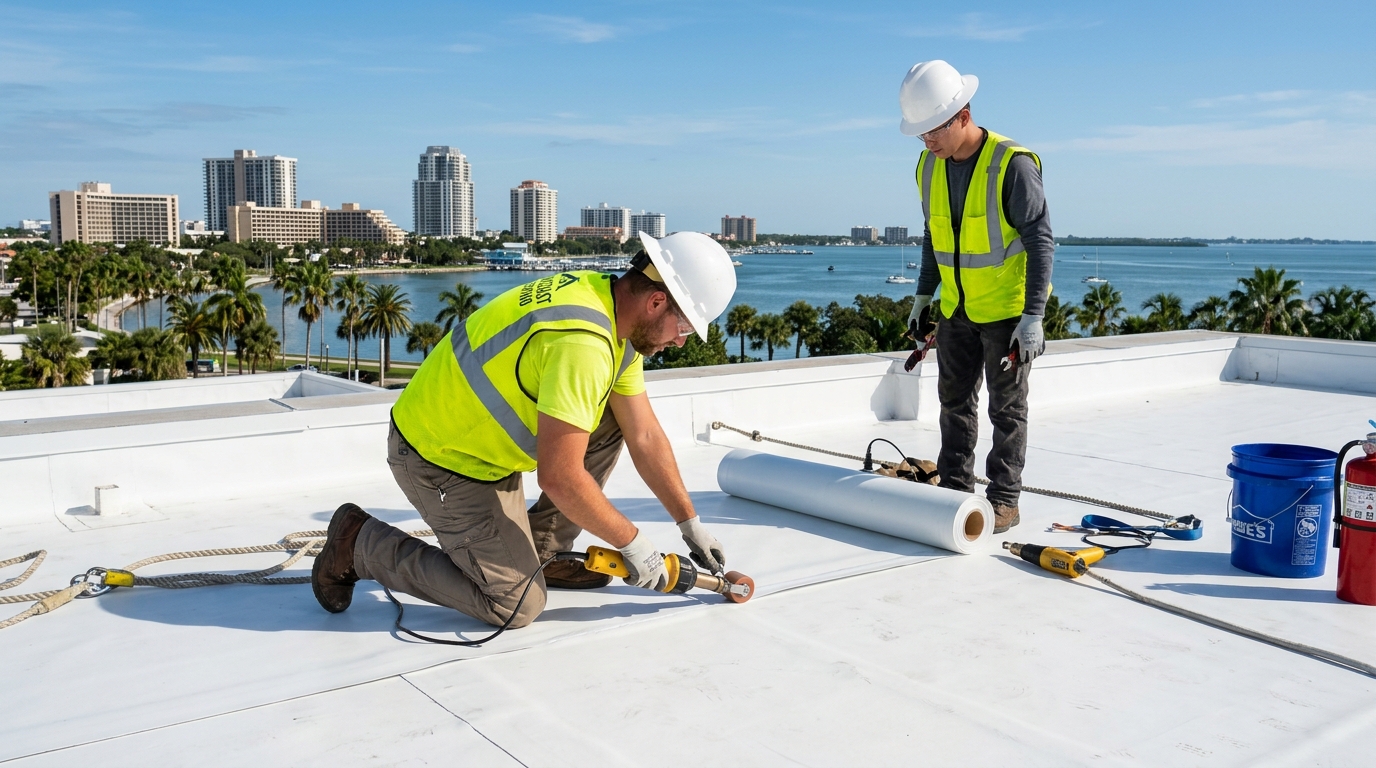
Central Illinois sits squarely within the Midwest hail corridor, enduring severe convective thunderstorm cells that produce dense, high-velocity hailstones exceeding 1.25 to 2.50 inches in diameter. Unlike wind damage, which immediately rips shingles from the roof plane, hail damage is frequently subtle and latent. Property owners who look up from their driveways often see an intact roof, unaware that thousands of high-speed hailstone impacts have permanently crushed the shingle substrate.
True hail damage occurs when the kinetic energy of the ice sphere fractures the asphalt mat beneath the mineral granules. This localized compressive rupture dislodges the protective ceramic granules, exposing the soft bituminous core to rapid solar ultraviolet degradation. Within 12 to 24 months, these bruises develop deep micro-fractures, asphalt delamination, and progressive water seepage that rots the roof deck. Dispatched independent roofing specialists perform rigorous forensic rooftop inspections to identify and document every impact.
Forensic Hail Inspection Process:
- 10x10 Test Square Forensic Chalking: Standardized 100-square-foot quadrant mapping across all directional roof slopes to count circular impact bruises.
- Fiberglass Mat Rupture Probing: Tactile inspection verifying underlying fiberglass scrim fracture beneath displaced mineral granules.
- Soft Metal Collateral Damage Mapping: Inspecting aluminum gutters, downspouts, window wraps, and AC condenser fins for matching impact spatter.
- Insurance-Ready Digital Photo Packet: High-resolution macro photography with scale markers establishing verifiable storm impact evidence.
1. Regional Microclimate Dynamics & Severe Storm Exposure
Hailstone Terminal Velocity & Kinetic Energy Physics: A 1.75-inch (golf ball) hailstone falls at approximately 73 feet per second (50 MPH), generating over 10 foot-pounds of kinetic energy upon impact. This concentrated point load exceeds the compressive threshold of standard 3-tab and older architectural shingles, creating microscopic fiberglass scrim fractures.
The open agricultural topography surrounding Sangamon County offers minimal surface friction against fast-moving supercells descending from the Illinois River Basin. Prairie winds generate dynamic uplift pressures that expose subtle installation flaws in edge metal flashings and steep-pitch valleys. When sudden downpours coincide with 60+ MPH wind shear, standard gravitational water shedding fails, necessitating immediate on-call physical mitigation.
2. Non-Destructive Moisture Diagnostics & FLIR Thermal Tracing
Collateral Soft Metal Forensic Tracing: Professional roof inspectors cross-reference rooftop shingle bruises against malleable metal surfaces. Dispatched technicians examine aluminum box vents, lead pipe jacks, valley flashing metal, and chimney caps for matching directional dent diameters and impact density.
Water entering through an exterior shingle breach rarely drops directly down. In older Springfield homes with tongue-and-groove decking or dimensional lumber joists, moisture follows gravitational slope lines for thirty to fifty feet before penetrating ceiling drywall. Dispatched specialists trace these concealed paths accurately with calibrated radio-frequency impedance meters and infrared thermography, saving homeowners thousands of dollars in unnecessary drywall exploratory destruction.
3. Step-by-Step Substrate Restoration Methodology
Standardized Inspection Methodology: Technicians conduct comprehensive 360-degree assessments, dividing the roof into North, South, East, and West test squares. Each verified hail impact is circled with surveyor's chalk, photographed at wide and macro focal lengths, and cataloged in a detailed forensic condition report.
Contractors utilize standardized manufacturer procedures endorsed by the Asphalt Roofing Manufacturers Association (ARMA) and NRCA. Fasteners are extracted with flat precision tools to prevent tearing the underlying water-shedding underlayment. The substrate deck is thoroughly inspected for rot or soft spots, reinforced where required, and capped with high-grade architectural assemblies designed to endure future Central Illinois weather cycles.
4. State Energy Efficiency Codes & Contractor Licensing Compliance
Independent Referral Dispatch Model: RoofExpertUSA Springfield Dispatch provides unbiased, objective property damage assessments and connects owners with licensed local contractors. We do not act as licensed public insurance adjusters or guarantee claim settlements, ensuring total transparency.
Illinois law strictly regulates roofing contractors to protect consumers from fraudulent storm chasers following major weather events. Dispatched contractors in our referral network hold verified licenses in good standing with the Illinois Department of Financial and Professional Regulation (IDFPR), carry comprehensive insurance, and comply with all City of Springfield Office of Building and Zoning permitting requirements.
5. Preventative Property Maintenance & Storm Preparedness
Long-Term Roof Preservation & Maintenance: Following inspection, homeowners receive clear technical guidance on whether spot tab repairs, valley re-flashing, or comprehensive Class 4 impact-resistant shingle replacement is the most cost-effective long-term solution for their property.
Routine proactive inspection of roof penetrations, chimney mortar joints, and valley troughs prevents minor weathering from becoming a middle-of-the-night ceiling disaster. Springfield property owners are encouraged to schedule professional post-storm evaluations whenever hailstones exceed one inch or local prairie wind gusts reach 50 MPH.
Active Storm Emergency in Springfield or Sangamon County?
Do not allow active roof leaks or wind-damaged shingles to destroy interior ceiling plaster and structural framing. Immediate telephone crew dispatch routing right now.
DISPATCH ON-CALL CREW: (888) 208-4155