Emergency Roof Leak Repair & Active Water Containment in Springfield, IL
Specialized Central Illinois damage mitigation, technical diagnostic procedures, and emergency contractor dispatch for residential and commercial properties in Springfield, IL.
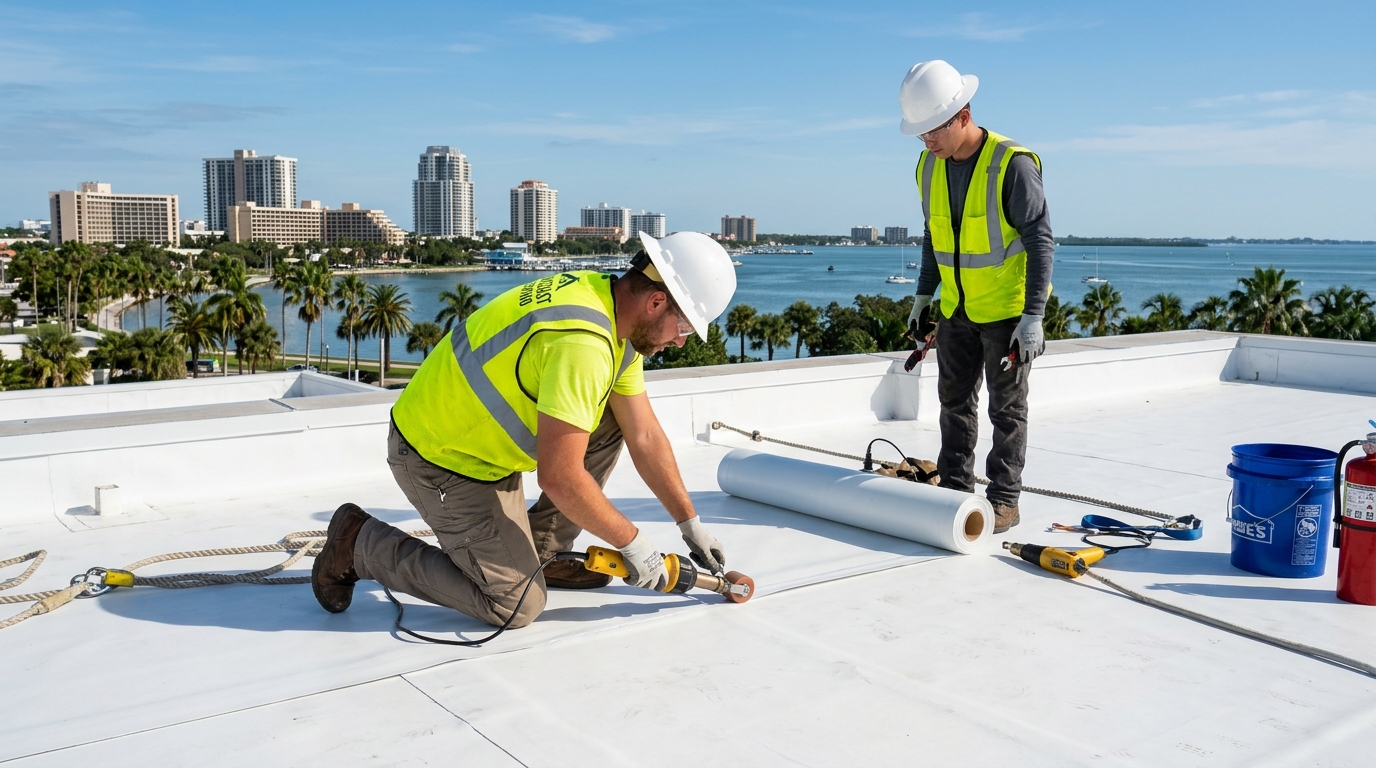
When active water intrusion breaches your ceiling during a severe Central Illinois thunderstorm, every minute of unchecked water flow causes exponential damage to finished plaster, interior drywall, hardwood flooring, and structural framing. Water pooling above ceilings creates dangerous drywall sag that can suddenly rupture under hydraulic weight, destroying electrical fixtures and valuable household furnishings below. Dispatched independent roofing crews arrive equipped with specialized water containment basins, ceiling relief diverters, and heavy-duty extraction pumps to halt interior destruction while establishing safe exterior rooftop access.
Springfield homes—from historic Greek Revival and Queen Anne residences near Lincoln Home National Historic Site to mid-century ranches in Jerome and contemporary builds in Lake Springfield—possess diverse roof geometry. Whether dealing with steep-slope gables or complex valley intersections, water entering through storm-torn shingles frequently tracks along concealed rafters before dripping through ceiling light boxes. Our referral dispatch service connects you with vetted, licensed local roofing contractors who isolate the active moisture point rapidly without exploratory interior demolition.
Key Emergency Leak Containment Protocols:
- Interior Ceiling Relief: Controlled puncture of water-filled ceiling blisters into catchment bladders to relieve hydrostatic pressure and prevent ceiling collapse.
- FLIR Infrared Thermal Mapping: Pinpointing hidden moisture travel paths along attic joists, rafters, and fiberglass batt insulation without damaging walls.
- Exterior Temporary Barrier: Rapid application of self-adhering elastomeric rubberized asphalt membranes over compromised deck sections.
- Waterproof Tarp Encapsulation: Full timber-batten secured 10-mil poly tarping over surrounding roof courses to resist subsequent rain squalls.
1. Regional Microclimate Dynamics & Severe Storm Exposure
Central Illinois Prairie Squall Moisture Dynamics: Sangamon County experiences sudden atmospheric frontal boundaries where 2 to 4 inches of rain fall in under two hours, propelled by horizontal prairie winds. These intense microclimates overpower standard drainage channels, forcing water into nail penetrations, rusted valley seams, and unsealed masonry joints.
The open agricultural topography surrounding Sangamon County offers minimal surface friction against fast-moving supercells descending from the Illinois River Basin. Prairie winds generate dynamic uplift pressures that expose subtle installation flaws in edge metal flashings and steep-pitch valleys. When sudden downpours coincide with 60+ MPH wind shear, standard gravitational water shedding fails, necessitating immediate on-call physical mitigation.
2. Non-Destructive Moisture Diagnostics & FLIR Thermal Tracing
Non-Destructive Thermal Diagnostics: Dispatched technicians deploy high-resolution FLIR infrared thermal cameras combined with dielectric radio-frequency impedance meters. Operating on thermodynamic evaporative cooling principles, wet insulation displays an unmistakable cold thermal gradient, enabling technicians to trace water migration back to its exact exterior roof breach.
Water entering through an exterior shingle breach rarely drops directly down. In older Springfield homes with tongue-and-groove decking or dimensional lumber joists, moisture follows gravitational slope lines for thirty to fifty feet before penetrating ceiling drywall. Dispatched specialists trace these concealed paths accurately with calibrated radio-frequency impedance meters and infrared thermography, saving homeowners thousands of dollars in unnecessary drywall exploratory destruction.
3. Step-by-Step Substrate Restoration Methodology
Step-by-Step Substrate Restoration: Once active leaks are halted, technicians systematically unseal affected shingle courses using flat pry bars without tearing adjacent mats. Damaged felt is replaced with high-tack polymer underlayment, compromised plywood decking is reinforced with CDX exterior-grade sheathing, and color-matched architectural shingles are hand-fastened with six galvanized nails per shingle.
Contractors utilize standardized manufacturer procedures endorsed by the Asphalt Roofing Manufacturers Association (ARMA) and NRCA. Fasteners are extracted with flat precision tools to prevent tearing the underlying water-shedding underlayment. The substrate deck is thoroughly inspected for rot or soft spots, reinforced where required, and capped with high-grade architectural assemblies designed to endure future Central Illinois weather cycles.
4. State Energy Efficiency Codes & Contractor Licensing Compliance
Illinois Licensing & Code Compliance: All roofing repairs comply with the Illinois Roofing Industry Licensing Act (225 ILCS 320) and Springfield municipal building codes. Dispatched contractors maintain active IDFPR roofing licenses, minimum ,000,000 general liability insurance, and comprehensive worker's compensation coverage.
Illinois law strictly regulates roofing contractors to protect consumers from fraudulent storm chasers following major weather events. Dispatched contractors in our referral network hold verified licenses in good standing with the Illinois Department of Financial and Professional Regulation (IDFPR), carry comprehensive insurance, and comply with all City of Springfield Office of Building and Zoning permitting requirements.
5. Preventative Property Maintenance & Storm Preparedness
Preventative Maintenance & Storm Preparedness: Following emergency containment, property owners receive actionable guidance on trimming overhanging oak and walnut branches, cleaning seasonal gutter silt, inspecting plumbing boot neoprene collars, and scheduling annual pre-storm roof assessments.
Routine proactive inspection of roof penetrations, chimney mortar joints, and valley troughs prevents minor weathering from becoming a middle-of-the-night ceiling disaster. Springfield property owners are encouraged to schedule professional post-storm evaluations whenever hailstones exceed one inch or local prairie wind gusts reach 50 MPH.
Active Storm Emergency in Springfield or Sangamon County?
Do not allow active roof leaks or wind-damaged shingles to destroy interior ceiling plaster and structural framing. Immediate telephone crew dispatch routing right now.
DISPATCH ON-CALL CREW: (888) 208-4155